The Raritan Blog
Home » Raritan Blog » Why Software Remote Access Isn’t Always Enough
Why Software Remote Access Isn’t Always Enough
October 29, 2026
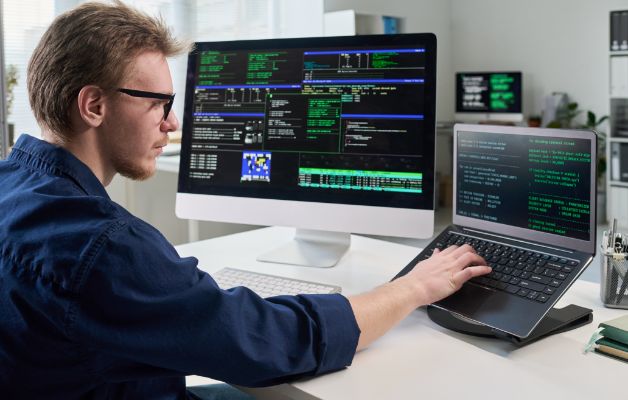
Few technologies have changed day-to-day infrastructure management as dramatically as software-based remote access. Administrators can troubleshoot systems, deploy updates, support users, and monitor infrastructure without traveling to a facility or sitting in front of a physical device. As organizations have expanded geographically and embraced distributed operating models, these capabilities have become essential.
The success of these tools has been so significant that many organizations now view remote access as a solved problem. If systems can be reached remotely, support teams can respond quickly, operational costs can be reduced, and expertise can be applied regardless of physical location. In most situations, that assumption is entirely reasonable.
The challenge is that operational environments are rarely defined by normal conditions alone. Infrastructure strategies must also account for the moments when systems behave unexpectedly, updates fail, or visibility is lost. Those are often the moments that place the greatest demands on support teams, and they are also the moments that expose the limitations of relying on a single layer of access.
When Visibility Disappears
Most software-based remote access platforms depend on several components functioning properly. The operating system must be available, network services must be active, and the software itself must be running as expected. When those conditions are met, administrators gain a powerful and flexible management platform that can support a wide range of operational requirements.
However, the very scenarios that require the fastest response are often the scenarios that interrupt those dependencies. A failed operating system update, corrupted software component, or network-related issue can eliminate visibility at precisely the moment support teams need it most. What appeared to be a manageable event can quickly become more complicated when administrators lose the ability to interact with the affected system.
This challenge becomes even more pronounced in operational environments that depend on specialized technologies. Many organizations continue to support systems that incorporate proprietary applications, embedded operating systems, or highly customized platforms. These environments often play critical roles within manufacturing operations, healthcare facilities, and other specialized environments, yet they may not align neatly with conventional remote management approaches.
The result is not necessarily a failure of software-based access. Rather, it highlights the reality that no single management technology can address every operational scenario.
The Limits of a Software-Only Strategy
As infrastructure environments become more distributed, organizations are increasingly evaluating remote access through the lens of operational resilience rather than convenience. The question is no longer simply whether a system can be accessed remotely. The more important question is whether visibility and control can be maintained across the widest possible range of conditions.
This shift is changing how organizations think about remote management architectures. Rather than viewing software access as a complete solution, many are beginning to view it as one component of a broader strategy designed to support both routine operations and unexpected events.
Hardware-level access occupies an important role within that strategy. Because it operates independently of the software stack, it can provide visibility and control during situations where traditional remote access tools may be unavailable. Historically, organizations associated this capability with troubleshooting and recovery scenarios. While those use cases remain important, many are now recognizing that hardware-level access can also support broader operational objectives.
As infrastructure footprints expand and support organizations become increasingly centralized, maintaining consistent visibility across diverse environments becomes more important. Hardware-level access helps create consistency by providing a common operational layer that is not dependent on the specific software platform running on a device.
Building Operational Resilience
The most resilient infrastructure strategies rarely depend on a single technology or management approach. Instead, they combine complementary capabilities that work together to support a variety of operational requirements.
Software-based remote access remains indispensable because it provides flexibility, functionality, and ease of use. It enables support teams to work efficiently and respond quickly under normal operating conditions. Hardware-level access complements those capabilities by extending visibility into situations where software-based tools may be limited or unavailable.
This layered approach is becoming increasingly important as organizations seek to support larger operational footprints without proportionally increasing staffing levels. Centralized expertise, distributed infrastructure, and rising expectations for uptime are creating new demands on support organizations. Maintaining multiple layers of visibility and control helps ensure those teams can respond effectively regardless of the circumstances they encounter.
Rather than asking which technology is better, organizations are increasingly asking how different technologies can work together to support a more resilient operational model. That shift reflects a broader understanding of what modern infrastructure management requires.
Looking Ahead
Remote access will continue to play a central role in infrastructure management, but the conversation surrounding it is evolving. As organizations support more systems across more locations, resiliency is becoming just as important as convenience. The ability to maintain visibility during both routine operations and unexpected events is increasingly viewed as a strategic advantage rather than a technical preference.
For many organizations, that realization is driving a broader discussion about how remote access technologies fit into long-term operational strategies. To learn more about how organizations are combining software-based management tools with hardware-level access to support modern operational environments, download our white paper.
Other Blog Posts
- What Manufacturing, Healthcare, and Broadcast Operations Have in Common
- Posted on October 28, 2026
- KVM Is No Longer Just a Data Center Tool
- Posted on October 27, 2026
- The Road to 800VDC: What High-Density Infrastructure Requires Next
- Posted on October 21, 2026
-
Engineering Rack-Level Infrastructure for High-Performance Environments
How HPC and AI Workloads Are Reshaping Rack Design - Posted on July 28, 2026
-
Secure by Design: What to Look for in a Modern KVM Platform
Why Security Architecture Matters for Out-of-Band Management - Posted on July 28, 2026
Subscribe
Upcoming Events
Latest Raritan News
- Legrand Introduces Next-Generation KVM Platform Built to Bring Critical Systems Back Online in Minutes
- Posted on July 20, 2026
- Greater Choice, Scalability, Speed: Why Legrand is Doubling Down on Open Compute Project Innovations
- Posted on October 3, 2025
- Legrand Brings Greater Flexibility to Data Center Operators with New Intelligent Rack PDU Universal Input Option
- Posted on February 26, 2025
- Legrand Expands Full Suite of DX2 SmartSensors, Keeping Data Centers Ahead of Rack Power and Environmental Monitoring Challenges
- Posted on December 18, 2024
- Legrand Wins Back-to-Back Awards for Intelligent Rack Power Distribution Innovation
- Posted on May 24, 2024