The Raritan Blog
Home » Raritan Blog » The Road to 800VDC: What High-Density Infrastructure Requires Next
The Road to 800VDC: What High-Density Infrastructure Requires Next
October 21, 2026
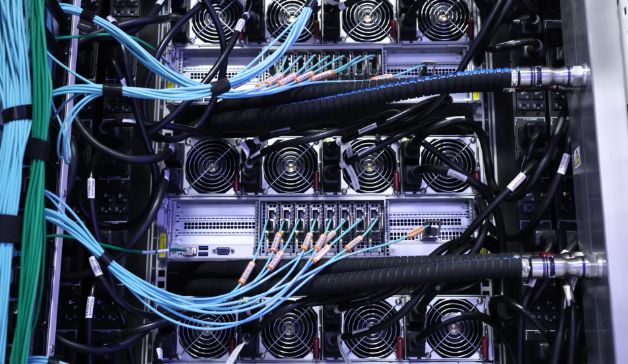
As data center rack densities continue to rise, traditional power architectures are approaching their practical limits. What once supported conventional enterprise workloads is now being tested by AI workloads, GPU-rich environments, and concentrated compute demand driving new conversations about how power should be distributed inside the rack.
For years, AC power has remained the dominant approach because it is familiar, well understood, and widely supported across infrastructure environments. However, the power requirements of modern high-density deployments are beginning to push beyond what conventional AC distribution can efficiently support.
Why Power Density Is Changing the Conversation
Not long ago, rack densities commonly topped out around 20 to 30kW per rack. Today, AI deployments are in the 130kW per rack neighborhood and will only grow from there. As densities climb, operators must deliver larger amounts of power into smaller footprints while maintaining efficiency and minimizing heat generation.
At these levels, traditional AC architectures become increasingly difficult to scale. Higher current requires larger conductors, more copper, and additional infrastructure to support safe distribution. This creates both physical and economic challenges within the rack.
As a result, many operators are exploring higher-voltage direct current architectures, particularly 800VDC, to reduce current loads while supporting higher power delivery.
Why 800VDC Is Emerging
The appeal of 800VDC architectures is that they operate near the upper end of what IEEE still classifies as low voltage. This distinction allows operators to pursue higher-capacity power distribution without moving into a medium-voltage architecture and its additional complexity. For high-density AI deployments, 800VDC may also improve distribution efficiency, reduce power conversions, lower costs, and reduce the physical bulk of cabling and related infrastructure.
For AI-focused facilities, however, adoption is moving faster than the shared safety and operational framework. From the utility interconnection inward, 800VDC systems require carefully engineered isolation, grounding, protection, and fault-clearing schemes to prevent a fault from propagating beyond the affected equipment. Because the move to 800VDC is still relatively new, utilities, standards bodies, manufacturers, and operators are still working to define the common safety practices, technical standards, and operational requirements needed for widespread adoption.
At the same time, interest is not limited to a single approach. Some organizations are evaluating ±400VDC architectures as a transitional step, particularly for brownfield facilities where a complete redesign may not be practical. For many operators, these approaches can offer a familiar pathway toward higher-voltage distribution while limiting operational disruption.
What Still Needs to Be Solved
While momentum is building, the standards needed to deploy and operate 800VDC consistently are still catching up. Although 800VDC sits near the upper end of IEEE’s low-voltage classification, it introduces DC-specific protection, grounding, safety, and operational considerations that are unfamiliar to many data center teams.
The transition is likely to occur in phases. Operators may begin by adding sidecar conversion equipment inside existing AC data centers to serve selected 800VDC racks or AI clusters while preserving the surrounding infrastructure. As standards, utility coordination, and the equipment ecosystem mature, future purpose-built facilities may adopt 800VDC as the primary power architecture throughout the data center.
Standards development also remains critical. Organizations such as IEEE, ASHRAE, and OCP continue shaping guidelines around safety, interoperability, and deployment models. These standards will influence how quickly adoption occurs and whether the industry converges around a common architecture.
Designing for Flexibility
The transition to 800VDC architectures will not happen overnight. Different workloads, facility types, and deployment models will likely support multiple architectures simultaneously for years to come.
As a result, many operators are not treating 800VDC as an immediate replacement, but as part of a longer-term migration strategy. Modular power systems, adaptable rack infrastructure, and flexible interfaces allow facilities to evolve as standards and technologies mature.
This approach reduces long-term risk while preparing environments for future power demands.
Looking Ahead
The move toward 800VDC is being driven by physics as much as by innovation. As compute density increases, the need for more efficient power delivery becomes harder to ignore.
While the final architecture is still taking shape, the broader direction is becoming clearer: higher-density environments will require new approaches to rack-level power distribution.
To learn more about how evolving rack power architectures are shaping high-density deployments, explore Legrand’s solutions for power distribution, cabinets, and next-generation infrastructure design.
Ready to prepare your rack infrastructure for increasing power demands? Explore the Raritan PX4 Rack PDU.
Other Blog Posts
- Why Software Remote Access Isn’t Always Enough
- Posted on October 29, 2026
- What Manufacturing, Healthcare, and Broadcast Operations Have in Common
- Posted on October 28, 2026
- KVM Is No Longer Just a Data Center Tool
- Posted on October 27, 2026
-
Engineering Rack-Level Infrastructure for High-Performance Environments
How HPC and AI Workloads Are Reshaping Rack Design - Posted on July 28, 2026
-
Secure by Design: What to Look for in a Modern KVM Platform
Why Security Architecture Matters for Out-of-Band Management - Posted on July 28, 2026
Subscribe
Upcoming Events
Latest Raritan News
- Legrand Introduces Next-Generation KVM Platform Built to Bring Critical Systems Back Online in Minutes
- Posted on July 20, 2026
- Greater Choice, Scalability, Speed: Why Legrand is Doubling Down on Open Compute Project Innovations
- Posted on October 3, 2025
- Legrand Brings Greater Flexibility to Data Center Operators with New Intelligent Rack PDU Universal Input Option
- Posted on February 26, 2025
- Legrand Expands Full Suite of DX2 SmartSensors, Keeping Data Centers Ahead of Rack Power and Environmental Monitoring Challenges
- Posted on December 18, 2024
- Legrand Wins Back-to-Back Awards for Intelligent Rack Power Distribution Innovation
- Posted on May 24, 2024