The Raritan Blog
Home » Raritan Blog » KVM Switches: What You Need to Know
KVM Switches: What You Need to Know
Alyssa Scheyd
January 11, 2018
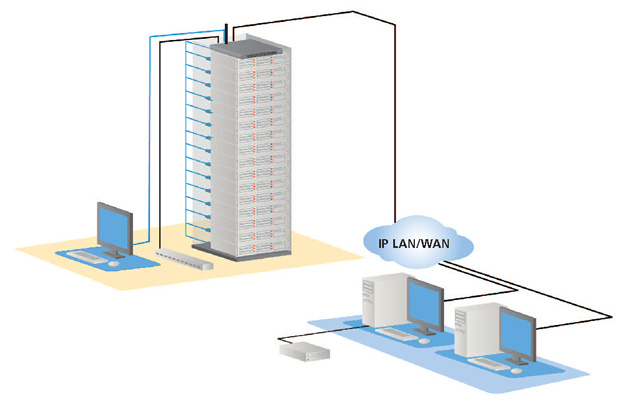
At its core, a KVM switch is simply a piece of hardware that allows one person to control multiple computers using a single keyboard, monitor, and mouse from a centralized location. The earliest examples of KVM switches on record actually pre-date the invention of the mouse itself, which is why they were originally used as testing tools for motherboard and production server quality tests.
With the advent of mouse interfaces like PS/2, USB, Sun, and Mac, however, the concept itself evolved into something much more meaningful than those original applications. For many organizations, KVM switches act as the backbone of their entire technological infrastructure - even if not everyone has necessarily come to realize that simple fact quite yet.
What Are the Four Categories of KVM Switches?
There are a few different categories of KVM switches available depending on the goals that you're trying to accomplish. From a computer access and control perspective, it breaks down into two options:
- Single user KVM switches, which allows a single person to access as many computers as they need from a single-point-of-access.
- Multi user KVM switches, which are intended for larger installations where multiple people need to be able to remotely manage a larger number of computers or servers. This is the type of switch found in a data center, for example.
From an actual application and technology perspective, there are two additional types of KVM switches available:
- Analog KVM switches, which require a direct cable connection (usually either Coax or Cat5) between the controlled computer(s), the KVM switch and the console.
- Digital KVM switches, which allow users to control servers over any IP connection - whether you're talking about a company LAN or from halfway around the world using a standard Internet connection it doesn't matter.
The Major Benefits of KVM Switches
The core advantage of using KVM switches extends far beyond the simple ability to centralize access and control for multiple servers, PCs or workstations. Perhaps the most significant benefit comes by way of increased productivity. A company's IT staff can now respond to incidents from any location, leading to a much faster response rate and an easier recovery process when a disaster happens to strike.
A KVM switch can allow a critical IT staff member to instantly reach the BIOS of an affected machine, even if they're miles away from the machine itself, dramatically cutting down on how long it takes to diagnose the problem. This option is not available with software-based remote access solutions, which typically do not offer the type of "out-of-band access" function which is needed.
Speaking of "out-of-band access", another major benefit of KVM switches comes by way of improved business continuity and security in general. Even if the corporate network is down, IT personnel can still access, control, and manage a company's servers in an emergency situation. The data transmitted through KVM-over-IP switches, in particular, is also encrypted using advanced techniques like AES, FIPS 140-2, and Smart Card authentication, leading to a dramatically improved sense of security in a situation where this could not be more valuable.
The Raritan Approach
At Raritan, we pride ourselves on our ability to provide KVM switches and other remote access products to partners in a wide range of different industries. We believe that one of our true strengths ultimately comes down to flexibility: whether you're looking for a solution for a server room, a data center or simply want to increase the ease at which you can work remotely, Raritan has an option that will meet your unique challenges every time.
To find out more about our high performance and standard KVM-over-IP switches, as well as other options like our KVM/serial console server and our single port IP KVM option, visit our website here.
Other Blog Posts
- The Rapid Growth of AI and the Use of Raritan PDUs to Meet Higher Power Demands
- Posted on October 11, 2023
- Data Center Report Fewer Outages, But Downtime Still Costly
- Posted on September 20, 2023
- Survey: Energy Usage and Staffing Shortages Challenge Data Centers
- Posted on September 20, 2023
- Raritan Secure Switch: Secure NIAP 4.0 Compliant Desktop KVM
- Posted on September 20, 2023
- The Midwest is a Hot Market for Data Centers: How the New Generation of Intelligent Rack PDUs Can Save Cloud Giants Uptime and Money
- Posted on September 7, 2023
Subscribe
Upcoming Events
- Advancing Data Center Construction West 2024
- May 6 – 8 • Salt Lake City, UT
- Net Zero Data Center
- May 16 – 17 • Dallas, TX
- 7x24 Exchange Spring
- June 9th • JW Marriott Orlando Grande Lakes
Latest Raritan News
- Legrand Certifications and Process Controls Provide Confidence in Information Security for Network-Connected Devices in Data-Related Applications
- Posted on April 1, 2024
- Legrand Releases Version 4.0 of Raritan’s Industry-Leading Secure KVM Switches, Raising Bar for Secure Desktop Access
- Posted on July 31, 2023
- Legrand Revitalizes Data Center Sector with Two Revolutionary Intelligent Rack PDUs
- Posted on May 1, 2023
- Raritan Reveals The MasterConsole® Digital Dual KVM Switch
- Posted on February 18, 2021
- Legrand Data, Power and Control Division Announced as Finalist in Six Categories at DCS Awards 2020
- Posted on November 9, 2020