The Raritan Blog
Home » Raritan Blog
Data Center Infrastructure Management (DCIM) and Government Data Center Consolidation
Anthony Bonaventura
April 13, 2012
Over the past fifteen years or so the Federal government has nearly quadrupled the number of data centers it operates. These centers have been using less than half of their compute power despite the additional costs for infrastructure, real estate and energy which have rapidly become more expensive and unsustainable.
The Federal Data Center Consolidation’s goal is to shut down data centers the government does not need and consolidate and optimize the ones that remain to be more efficient by reducing the overall energy and real estate footprint of government data centers. This initiative also includes increasing the IT security in these data centers given the almost daily reports of cyber-attacks we hear about, let alone the ones we don’t.
Remote Management of a “Cloud” Infrastructure
Paula Alves
April 9, 2012
Over the past few years, economic uncertainty and the subsequent impact on businesses have led many IT organizations down a cost reduction path. to virtualization of their IT infrastructure, and movement to the “cloud.” In fact, according to Gartner, in Cloud Computing: Economic, Financial and Service Impact on IT Planning Assumptions, “cloud” adoption is forecasted to grow from 3.5% of the IT marketplace to 5.9% in 2015.
To ensure the IT infrastructure remains available before an organization jumps on the “cloud” bandwagon, it is important to identify the tools that will be needed to control, manage and secure this new “cloud-based” architecture. With application virtualization and additional access options such as mobile smartphones and tablets – not always owned by the business – how do you ensure secure access to your network? The costs to rip and replace existing infrastructures can be exorbitant.
Good Advice for RDP Vulnerability
Richard Dominach
April 9, 2012
I have been following the RDP vulnerability mentioned in my previous post:
https://www.raritan.com/blog/detail/yet-another-security-issue-with-remote-access-software
Found a good article on f-secure.com with advice on how to protect your environment.
Also makes the point that SMB’s may not be aware that contractors enable RDP to help maintain their IT environment.
Guess how much a typical data center failure can cost?
April 5, 2012
According to a recent study, the average data center downtime is 90 minutes, which results in an average cost per incident of about $505,500 - Ouch! And, of those surveyed, 95% have experienced one or more unplanned data center outages in the past 2 years - that’s over $1 million dollars in 2 years! (The math - 1 outage/yr x $500K x 2 years = $1Million!) To make matters worse, only 1/3 of respondents felt that they had sufficient resources in order to recover from a failure! Don’t be left in the dark and experience an outage—let Raritan help you prepare with our innovative DCIM solution!
Why Deploy High Voltage to IT Equipment Racks?
Greg More
April 5, 2012
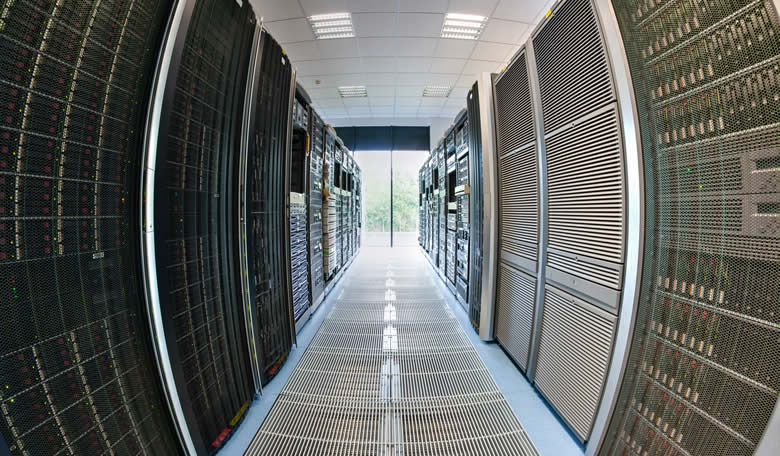
Data centers are finding that they must deploy more and more power to their racks. High-power requirements at data center racks are driven by high density such as racks filled with 1U “pizza box” servers or multiple blade server chassis in one rack. Racks of network storage devices can also drive high demand for power.
When considering power demand it is important to determine and design for peak actual demand. Designing to IT equipment nameplate ratings is excessively high. Designing for average power consumption may not be sufficient for periods of peak demand.
Many data center managers are doing a good job conserving energy – decreasing PUE, raising data center temperatures, using air-side economizers to reduce energy consumption for cooling—but average power consumption at the rack may still go up. In fact, the increased efficiency means more power is available for servers which supports data center growth.
Subscribe
Upcoming Events
Latest Raritan News
- Legrand Introduces Next-Generation KVM Platform Built to Bring Critical Systems Back Online in Minutes
- Posted on July 20, 2026
- Greater Choice, Scalability, Speed: Why Legrand is Doubling Down on Open Compute Project Innovations
- Posted on October 3, 2025
- Legrand Brings Greater Flexibility to Data Center Operators with New Intelligent Rack PDU Universal Input Option
- Posted on February 26, 2025
- Legrand Expands Full Suite of DX2 SmartSensors, Keeping Data Centers Ahead of Rack Power and Environmental Monitoring Challenges
- Posted on December 18, 2024
- Legrand Wins Back-to-Back Awards for Intelligent Rack Power Distribution Innovation
- Posted on May 24, 2024