The Raritan Blog
Home » Raritan Blog
Common Pain Points in Data Center Infrastructure Management
November 20, 2012
By - Khaled Nassoura, PE, General Manager, DCIM Software of Raritan
As we meet with companies around the world - from small, to midsize, to large enterprises - we’re struck by the similarities of the difficulties they share in managing their data centers.
If we had to pick one, over-arching description of the common problem, it’s this:
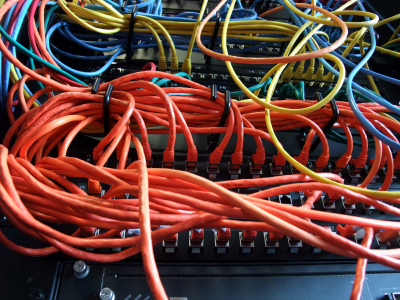
Knowing the physical, logical relationships that tie all their data center assets together as well as how these assets are tied to the infrastructure that supports them.
Here’s an example. Let’s say you would like to know the impact an infrastructure element such as a circuit breaker or a network switch port may have, upstream, on the servers that are connected to it. Furthermore, you’d like to know what applications are running on these servers and what departments or business units are being supported by these applications. These are the questions that become very difficult to answer “on the fly” when you have an urgent need to understand those dependency mappings.
Many of these data centers especially in the financial sector simply cannot afford to have any downtime. They must resolve any problems very quickly. This requires complete visibility into their systems and the infrastructure that supports their systems. For a data center manager, understanding the relationships between the assets and the infrastructure – dependency mapping – is extremely important.
A Dynamic View of Your Data Center’s Capacity
A very important topic in data centers today is capacity management and capacity planning.
Capacity planning is a simple as arithmetic. It is the total provisioned infrastructure minus the consumed resources and infrastructure. The total provisioned infrastructure in the data center is usually very static can be documented relatively easily by the architects and engineers who designed and built your data center. That’s the total size of your data center – how much power you have available; how many network switches and ports you have; how many power strips you have; how much power you have available to every rack; all of this is static information.
But data centers are never static
What’s very difficult to get a handle on is the number of resources that are in use at any point in time. That is a very dynamic set of information, and you can only get a handle on it if you have a system that can look at your data center from a holistic point of view and keep track of what goes in and out, what resources are in use, what’s connected and what’s disconnected.
So for data center managers to know the available data center capacity at any point in time, they must know the total provisioned infrastructure, which is relatively static, minus what’s in use at any point in time, which is very dynamic.
Without a DCIM solution, it’s impossible to get an immediate handle on these dynamic changes in the data center. Data center mangers don’t have the tools to easily track network and power connectivity. And if they don’t track the connectivity that means they don’t track those infrastructure resources that are in use at any point in time. Manual tools such as spreadsheets and Visio cannot keep track of this very dynamic set of information. Even data center management software tools that do not incorporate good connectivity management practices do not enable data center managers to accurately calculate their data centers’ capacity.
Raritan can help. Raritan’s DCIM solution is unlike any other and offers:
- Complete, all-in-one software solution
- Asset, connectivity, capacity, and change management
- Power, energy, and environment management
Click here to join our group on Linkedin.
Free passes available for end users - November 27th DCD Toronto
Dorothy Ochs
November 20, 2012
End users are invited to attend the upcoming DatacenterDynamics Toronto show on November 27th. Stop by our booth to see our latest solutions and enter a raffle drawing for a new iPad. Simply contact us if you would like a free pass. \
For more information, visit http://www.datacenterdynamics.com/conferences/2012/toronto-2012.
Google's Data Center
Greg More
October 23, 2012
Google was in the news this week wasn’t it? First, there was the intentional release of photos from inside their data center and stories about their data centers from journalists such as Steven Levy. Then there was the unintentional premature earnings release by RR Donnelley indicating earnings per share of $9.03 instead of the market expectation of $10.65 causing the stock price to fall $68.10 or 9% before trading was halted.

Scattered among the many photos of Google data centers were a few Easter eggs*. My favorite was the “Super Secret Strategic PUE Plan.” I’ve checked with our Power IQ energy management software product manager to learn whether Power IQ can calculate a PUE less than 1.0. He assures me that if Google can achieve a PUE less than 1.0 our Power IQ will be able to calculate it.
According to the May 2009 “The Datacenter as a Computer: An Introduction to the Design of Warehouse-Scale Machines” by Googlers Urs Holzle and Luiz Barroso, “The computing platform of interest no longer resembles a pizza box or a refrigerator but a warehouse full of computers … We must treat the data center itself as one massive warehouse-scale computer.”
The “one massive warehouse-scale computer” is composed of what Raritan has articulated as the concept of “smart racks.” A data center, whether a room or an entire building, is all about what is happening at the rack. Obviously, this is where the actual computing is taking place. It is also where the vast majority of the power is being consumed, or should be. It is the web of communications within the data center, within the organization, and for communications with the rest of the world. If this kingdom of IT is not properly protected and maintained there can be very serious consequences.
If you would like to learn more about smart racks, read the Raritan smart racks article.
*source: www.geek.com/articles/geek-pick/10-easter-eggs-from-inside-a-google-data-center-20121018/ . You can see more Easter eggs at: https://mashable.com/2012/10/18/google-data-center-easter-eggs/.
Paragon II Release 4.8.2 with support for high definition DDC adapters - Now Available
Paula Alves
October 17, 2012
Paragon II Release 4.8.2 provides several enhancements and maintenance items – particularly the release of high definition DDC adapters. These new DDC adapters support widescreen resolutions for 21” and 23” LCD displays:
- DDC-1080P – DDC adapter for 1920x1080 with a 16:9 ratio
- DDC-1920 – DDC adapter for 1920x1200 with a 16:10 ratio
This new release also provides a SwitchMan USB “front-end” to the P2-EUST User Station.
The upgrade is free for customers. It is recommended that all customers upgrade to this new release.
Please reference the release notes for more information on these new enhancements and included maintenance items.
Release 4.8.2 firmware and documentation can be accessed at Raritan’s Paragon II support page: https://www.raritan.com/support/Paragon-II/.
Deploying High Power in Data Center Racks
Greg More
October 11, 2012
Today, data center equipment racks require more power than ever before. The reasons for this come under two general headings: the still-growing need for computing power and the push toward virtualization and consolidation.
The decision to ramp up power provisioning generally comes from senior management. This is often because systems start to become strained, threaten performance, and the need for more server equipment brings with it a higher power demand. In addition to reducing the additional cost of that power, management may want to try to reduce their power consumption for corporate green initiatives.
Computing Power Demands Keep Growing
Trading companies, for example, have massive compute power needs, as their competitive advantage relies on running many different algorithms on vast amounts of data with very fast processors. In this environment, tenths of a second can make a difference between profit and loss. Enormous data volumes, growing in storage area networks (SANs), are also driving the demand for high power. SANs also grow as industries are required to keep more data by such regulation as Sarbanes-Oxley.
Colocation Facilities, Servers are Consolidated
These two needs—for computing power and cost savings—may be met at the facility level by consolidating whole data centers and colocation sites. Think of social media and online auction companies that have grown so fast that they have been forced to deploy their IT assets in a number of rented facilities. Some of these companies now find that having data centers scattered all over really isn’t the most efficient way to cut down on power consumption or to manage equipment and personnel. So they consolidate data centers into fewer locations and reduce total power consumption, but in each remaining center, that power draw may actually go way up because they are more densely packing racks.
Up to 42 1U-format “pizza box” servers or a few high-performing blade servers may be stacked in a rack, and some racks go even higher. The densely concentrated processors can draw quite a bit of power.
Raising Power Delivery: Voltage or Amps?
Given the choice of raising power delivery to racks by upping voltage or amperage, voltage carries some significant advantages.
First, it may save you some rewiring. That’s because wire gauge isn’t determined by voltage; it’s determined by current. So if you can move from, say, a 120V, 20A power feed to a 208V, 20A power feed, you can use the exact same cable and deliver roughly 75% more power.
Admittedly, 208V single phase is not what we would consider high power these days. Today, high power probably falls more towards three-phase 208V, which delivers three circuits instead of just one, or even 400V, where we get three circuits of 230V at the PDU itself. So the higher voltages and these three-phase systems are a nice way to deliver a lot of power to a rack with little or no wiring changes, depending on what you already have and how you change the infrastructure in your data center.
From Single-phase to Three-phase Power Cabling
If you were going to change your voltage from, say, 208V single-phase to 208V three-phase, you would need to rewire and therefore temporarily move your servers onto a different area. The advantage here is that those three-phase wires are contained in one cable that’s only slightly larger than the single-phase cable it replaces. And that, in turn, is a relatively simple change, and you are not adding many new cables that block the cooling airflow under the data center’s raised floor.
It’s a great idea to make these kinds of changes when you add or change out capacity, bringing in the new servers and then cutting over from the old racks to the new. Over time, you proceed to change out those old servers as well.
Solving for Higher Wattage = Higher Heat
Another factor that you need to consider is heat. With IT equipment, 1 watt of power consumed generates 1 watt of heat, so as watts go up, so does your data center temperature. You may be able to deploy more power through higher voltage, for example, but your cooling system has to have enough capacity to take out this additional heat as well.
We’ve seen customers dramatically reduce their power consumption and solve the heat problem by retrofitting existing data centers. One in downtown Manhattan changed their cooling to include air-side economizers, which bring in cooler outside air instead of running air conditioning units. They also brought in efficiency through our equipment, and through more efficient IT equipment from various vendors. It took lots of planning, since as a financial services firm they could not miss a day of trading for cutover. Over more than a year, however, they pulled their power consumption down dramatically.
Subscribe
Upcoming Events
Latest Raritan News
- Legrand Introduces Next-Generation KVM Platform Built to Bring Critical Systems Back Online in Minutes
- Posted on July 20, 2026
- Greater Choice, Scalability, Speed: Why Legrand is Doubling Down on Open Compute Project Innovations
- Posted on October 3, 2025
- Legrand Brings Greater Flexibility to Data Center Operators with New Intelligent Rack PDU Universal Input Option
- Posted on February 26, 2025
- Legrand Expands Full Suite of DX2 SmartSensors, Keeping Data Centers Ahead of Rack Power and Environmental Monitoring Challenges
- Posted on December 18, 2024
- Legrand Wins Back-to-Back Awards for Intelligent Rack Power Distribution Innovation
- Posted on May 24, 2024