部落格
主頁 » 部落格 » The Road to 800VDC: What High-Density Infrastructure Requires Next
The Road to 800VDC: What High-Density Infrastructure Requires Next
Posted on November 24, 2026 by Gento
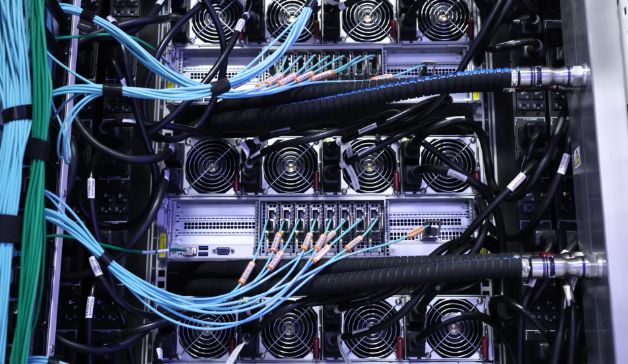
As data center rack densities continue to rise, traditional power architectures are approaching their practical limits. What once supported conventional enterprise workloads is now being tested by AI workloads, GPU-rich environments, and concentrated compute demand driving new conversations about how power should be distributed inside the rack.
For years, AC power has remained the dominant approach because it is familiar, well understood, and widely supported across infrastructure environments. However, the power requirements of modern high-density deployments are beginning to push beyond what conventional AC distribution can efficiently support.
Why Power Density Is Changing the Conversation
Not long ago, rack densities commonly topped out around 20 to 30kW per rack. Today, AI deployments are in the 130kW per rack neighborhood and will only grow from there. As densities climb, operators must deliver larger amounts of power into smaller footprints while maintaining efficiency and minimizing heat generation.
At these levels, traditional AC architectures become increasingly difficult to scale. Higher current requires larger conductors, more copper, and additional infrastructure to support safe distribution. This creates both physical and economic challenges within the rack.
As a result, many operators are exploring higher-voltage direct current architectures, particularly 800VDC, to reduce current loads while supporting higher power delivery.
Why 800VDC Is Emerging
The appeal of 800VDC architectures is that they operate near the upper end of what IEEE still classifies as low voltage. This distinction allows operators to pursue higher-capacity power distribution without moving into a medium-voltage architecture and its additional complexity. For high-density AI deployments, 800VDC may also improve distribution efficiency, reduce power conversions, lower costs, and reduce the physical bulk of cabling and related infrastructure.
For AI-focused facilities, however, adoption is moving faster than the shared safety and operational framework. From the utility interconnection inward, 800VDC systems require carefully engineered isolation, grounding, protection, and fault-clearing schemes to prevent a fault from propagating beyond the affected equipment. Because the move to 800VDC is still relatively new, utilities, standards bodies, manufacturers, and operators are still working to define the common safety practices, technical standards, and operational requirements needed for widespread adoption.
At the same time, interest is not limited to a single approach. Some organizations are evaluating ±400VDC architectures as a transitional step, particularly for brownfield facilities where a complete redesign may not be practical. For many operators, these approaches can offer a familiar pathway toward higher-voltage distribution while limiting operational disruption.
What Still Needs to Be Solved
While momentum is building, the standards needed to deploy and operate 800VDC consistently are still catching up. Although 800VDC sits near the upper end of IEEE’s low-voltage classification, it introduces DC-specific protection, grounding, safety, and operational considerations that are unfamiliar to many data center teams.
The transition is likely to occur in phases. Operators may begin by adding sidecar conversion equipment inside existing AC data centers to serve selected 800VDC racks or AI clusters while preserving the surrounding infrastructure. As standards, utility coordination, and the equipment ecosystem mature, future purpose-built facilities may adopt 800VDC as the primary power architecture throughout the data center.
Standards development also remains critical. Organizations such as IEEE, ASHRAE, and OCP continue shaping guidelines around safety, interoperability, and deployment models. These standards will influence how quickly adoption occurs and whether the industry converges around a common architecture.
Designing for Flexibility
The transition to 800VDC architectures will not happen overnight. Different workloads, facility types, and deployment models will likely support multiple architectures simultaneously for years to come.
As a result, many operators are not treating 800VDC as an immediate replacement, but as part of a longer-term migration strategy. Modular power systems, adaptable rack infrastructure, and flexible interfaces allow facilities to evolve as standards and technologies mature.
This approach reduces long-term risk while preparing environments for future power demands.
Looking Ahead
The move toward 800VDC is being driven by physics as much as by innovation. As compute density increases, the need for more efficient power delivery becomes harder to ignore.
While the final architecture is still taking shape, the broader direction is becoming clearer: higher-density environments will require new approaches to rack-level power distribution.
To learn more about how evolving rack power architectures are shaping high-density deployments, explore Legrand’s solutions for power distribution, cabinets, and next-generation infrastructure design.
Ready to prepare your rack infrastructure for increasing power demands? Explore the Raritan PX4 Rack PDU.
Other Blog Posts
- Why Software Remote Access Isn’t Always Enough
- Posted on November 24, 2026
- What Manufacturing, Healthcare, and Broadcast Operations Have in Common
- Posted on November 24, 2026
- KVM Is No Longer Just a Data Center Tool
- Posted on November 24, 2026
- Engineering Rack-Level Infrastructure for High-Performance Environments
- Posted on November 24, 2026
- Secure by Design: What to Look for in a Modern KVM Platform
- Posted on November 24, 2026
訂閱
近期活動
- Japan Cloud & Datacenter Convention 2025
- 06 Jun 2025 • Tokyo, Japan
- Interop Tokyo 2025
- 11 Jun - 13 Jun 2025 • Chiba, Japan
- Suntelephone ICT Business Solution 2025 (Sendai)
- 17 Jun 2025 • Sendai, Japan
- Suntelephone ICT Business Solution 2025 (Kanazawa)
- 25 Jun 2025 • Kanazawa, Japan
- Suntelephone ICT Business Solution 2025 (Takamatsu)
- 04 Jul 2025 • Takamatsu, Japan
Raritan最新新聞
- Legrand 推出新一代 KVM 平台,協助關鍵系統在數分鐘內恢復上線
- Posted on October 22, 2026
- —ISO27001 認證為 Legrand 羅格朗品牌(包括 Raritan®、Server Technology® 和 Starline® 品牌)經過徹底測試的數據、電源和控制設備的安全性提供了保證。
- Posted on July 1, 2024
- Legrand 使用兩大創新智慧型機架 PDU 重新活化資料中心產業
- Posted on May 1, 2023
- Exclusive interview丨How does Huizhou upgrade its manufacturing industry?
- Posted on December 2, 2021
- Raritan 發表 MasterConsole® 數位雙電腦切換器
- Posted on February 18, 2021